




Your CSR is on line one.
Lines two and three just called your competitor.
An AI receptionist and phone answering service for HVAC, plumbing and other multi-truck home-service companies, from $597 a month. It answers every call and web form in seconds, 24/7, books jobs into your calendar and texts back missed calls. Setup takes 48 hours; text-back switches on once carriers approve business texting, which takes 1 to 4 weeks.
Setup in 48 hours · every response timestamped · no lock-in
You’re not losing jobs to better contractors. You’re losing them to whoever picks up first. At peak, your CSR is on line one while lines two and three ring out. After 5pm the answering service takes over: it wakes your on-call tech at 3am for a tune-up and patches sales pitches through at 10pm. This system catches both: every call and form answered in seconds, 24/7, booked straight into your calendar.
The lead-response research (MIT/InsideSales; HBR 2011) is blunt: answer inside 5 minutes and qualification runs many times higher than next-day. The average business still takes hours. You already pay for every one of those calls in ads and listings. This is what stops paying for calls nobody answers.

Every call tracked back to what caused it
Work our founder, Carlos Benavides, ran in house and at agencies before Barlo Digital, and in a previous role outside it. Screenshots are redacted where a client asked or where an account is live. Barlo Digital is a new firm, so these are his professional history rather than client results the firm is claiming as its own.

Call tracking, wired by hand
The tag that turns a thumb tap on your number into a recorded conversion, plus the Conversion Linker that keeps the click ID attached so the call can be traced back to the ad that caused it. Built in the account, not briefed out.
Every call screened before it counted
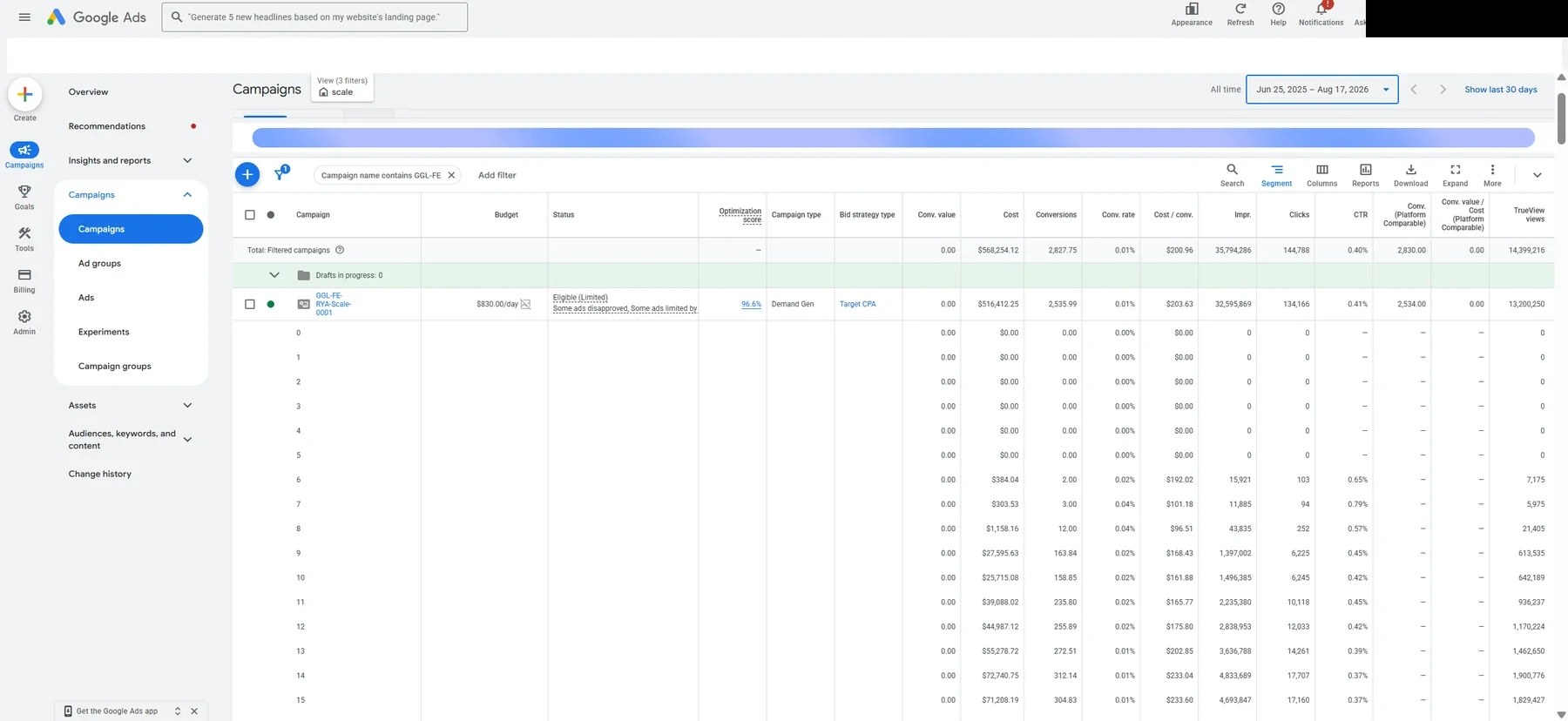
YouTube and Google Display ads with dynamic numbers, and a qualifying phone menu (age, state, intent) on every call before it was sold. In 30 days: $41,500 spend, 4,834 raw calls, 3,085 qualified (63.8%) and $92,550 revenue. Over 14 months the Demand Gen side spent $568,254 for 2,827.75 conversions, $200.96 each.
Get the free speed-to-lead checklist
Three checks on what actually happens to an inquiry that arrives after hours, and what the wait costs per job. No call, no pitch sequence. One email, and a reply from us if you send your site back.
Missed-call text-back + 24/7 AI receptionist + instant booking, installed in 48 hours. Growth tier ($1,297/mo) adds the review engine and Google Business Profile management. Every response timestamped. You audit the promise monthly.
Setup in 48 hours · every response timestamped · no lock-inTest your own response time today
Before you buy anything from anyone, measure the problem:
- Have a friend call your business line at 2pm on a weekday and fill out your website form tonight at 9pm. Time both responses honestly.
- If either took more than five minutes, do the math with your own numbers: your average ticket × the calls that ring out at peak and after hours each week. That’s the monthly number this fixes.
- Then test ours. This site practices what it installs: write to [email protected] and clock the reply.
If either response took more than five minutes, that is the leak. Setup in 48 hours.
What you get
- Overflow answered, not just after-hours: when your CSR has 10 calls hitting at once, lines two and three get a real answer instead of ring-out.
- Missed calls get a text back in seconds, before the caller reaches your competitor.
- An answering service that books, not one that takes messages: trained on your trade, your service area, your price book. Messages don’t pay for trucks; booked jobs do.
- Jobs land on your calendar, with a transcript and recording note after every call, so you audit what was said.
- One recovered job pays the month: at your average ticket, that is the entire math. The monthly SLA report is where you check it.
What the AI phone answering service includes
- Missed-call text-back + 24/7 AI receptionist + instant booking
- Review engine and Google Business Profile management in the Growth tier
- One recovered job at your average ticket pays the month
From $597/mo · Growth $1,297/mo · setup in 48 hours
Every response is logged and timestamped. The monthly SLA report is how you keep the promise honest.
Selling to other businesses rather than to homeowners? Inbound speed is not your constraint, booked meetings are: see B2B appointment setting.
The rest of the office work, from quote follow-up to review requests and the weekly report: AI automation, priced per build.
The evidence: Full field note: what 10 extra minutes of lead response costs a home-service company.
Frequently asked questions
Is the receptionist a robot my customers will hate?
Straight answer: it’s an automated assistant, it says so upfront, and some callers do prefer humans. Hiding that would be worse. But it’s not replacing your receptionist; it’s replacing voicemail and the answering service that patches sales pitches through at 10pm. It answers instantly, sounds human, books the job, and routes anything it can’t handle to a person, with an instant text so nothing sits. Start it after-hours only if you like. You review the recordings weekly and expand it when the calls convince you, not before.
I can get an AI phone tool online for $49. Why is yours $597 a month?
The $49 tool is real, and then it’s yours to script, tune, integrate, and babysit (operators report two weeks of tuning before it stops embarrassing them). $597 a month is the managed version: trade-specific scripting, calendar and text-back wired in, weekly call review by a human, and someone accountable when it needs fixing. You’re not buying minutes; you’re buying answered-and-booked. Compare it to a human answering service, where Ruby’s published plans run $250 to $1,725 a month, not to raw software.
We already have a great CSR / office manager.
Keep her. She’s line one. This is line two when she’s already on a call. And lunch. And 5:01pm. And Saturday. Run the response-time test above and you’ll see exactly which calls she physically can’t catch; those are the only ones this touches.
What does setup actually involve?
48 hours: your numbers forward correctly, the text-back fires, forms route, and the calendar connects. You approve the scripts before anything answers a real customer. Book below and bring your current phone setup.
Why month-to-month? Every other vendor wants a contract.
Lock-ins protect vendors from their own results. Month-to-month at full rate means the system has to re-earn its keep every 30 days. The timestamped SLA report is how you check.
Setup runs in 48 hours. The only question is how many callers hit voicemail between now and then.
Setup in 48 hours · every response timestamped · no lock-in